back
FEATURED ARTICLE
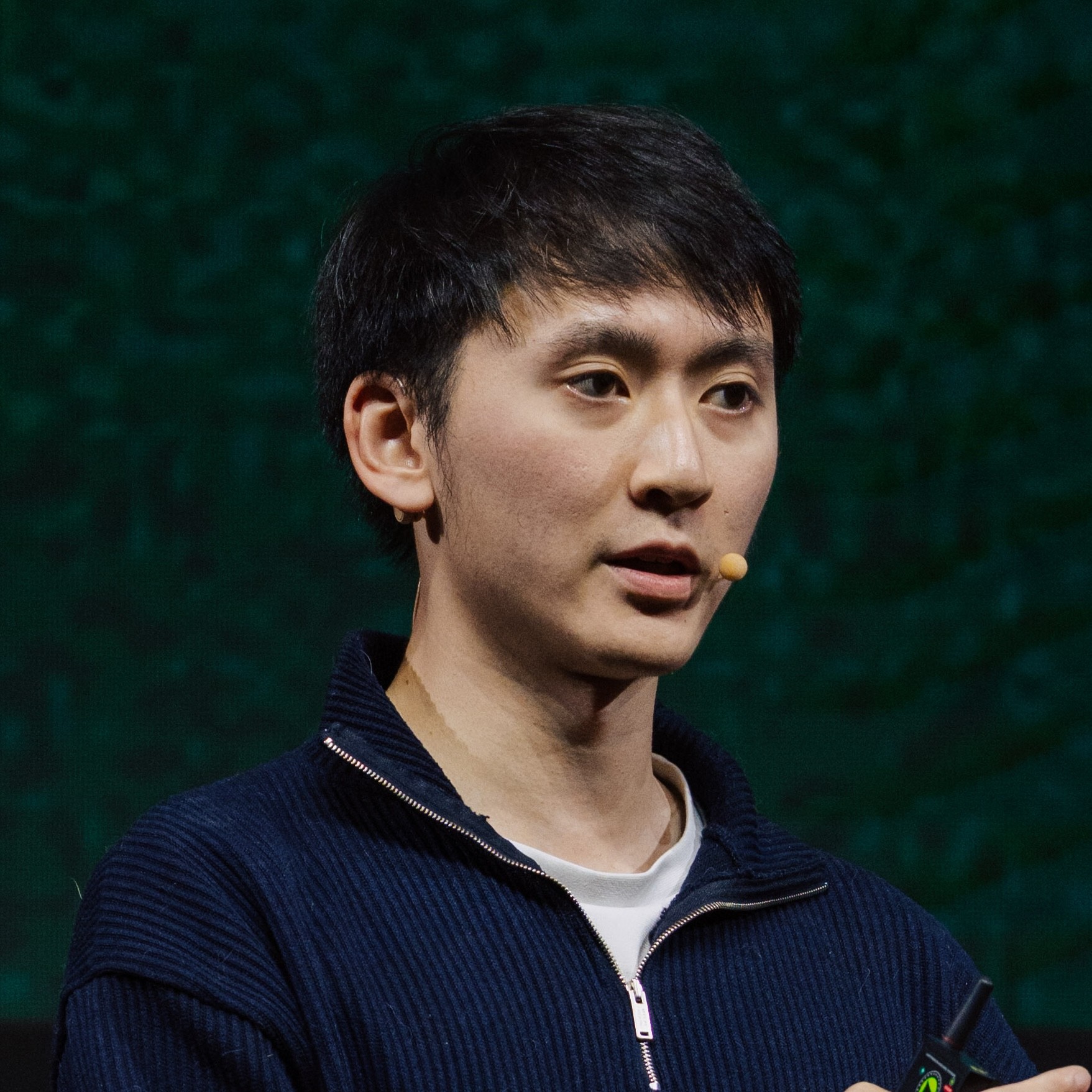
Joshua Sum
Founder, Morphic
8 min read

Every company develops knowledge that is difficult to replace, knowledge that shapes important decisions day in and day out. Yet much of it remains in people’s heads, scattered across conversations, and locked inside disconnected software like Salesforce, Hubspot, Google Suites, and different communications channels.
We’re building Morphic to help companies preserve those tribal knowledge, connect it to everyday work and regain control over your company’s intelligence.
We're Addressing Two Problems
Tribal Knowledge is a set of unwritten rules or information known by a specific group or individuals. It is the reason a specific account executive phrases renewal emails a certain way, the informal reason a deal died that never made it into the CRM notes field, and the relationship history that lives in someone’s memory rather than in a system of record.
Sovereign AI refers to the degree of control an organization has over where its data, AI models, infrastructure, operations, and governance sit. [1]. When a company relies on tools that aren’t sovereign, you end up losing legal, operational, and architectural control over your assets. Everything from the record of how it sells, what its customers actually said, and what the team learned in the process ends up sitting on someone else’s infrastructure, governed by someone else’s retention policy and someone else’s model-training terms.
This is relevant since tribal knowledge loss rarely announces itself. It’s a measured cost, and the numbers are large enough to feel the effects of
Deloitte puts the annual cost of voluntary knowledge-worker turnover in the U.S. at $1.3 trillion [2].
Gartner estimates that 70 - 80% of enterprise knowledge is never captured in any document or system at all [4].
A new hire in a knowledge-intensive role takes 8 - 12 months to reach full productivity, even under normal conditions [3].
Just think of how much time, resources, and effort are being wasted searching for scattered and lost context. One lost detail can compound into deals worth millions.
Your company’s proprietary data and deep industry workflows are not only valuable but vulnerable. The problem of preserving tribal knowledge becomes not just knowledge that walks out the door when people do but that the ownership of this knowledge would be completely lost if it means preserving it in the wrong hands. Losing control of your data can take several forms:
A smaller company builds a clever workflow on top of a larger platform it depends on. The platform’s AI layer identifies across its whole customer base, and the next release ships that exact workflow as a native feature.The smaller company’s own usage data effectively became the product brief for something now built into the platform it doesn’t control, with nothing owed back to whoever generated the pattern in the first place
An AI vendor gets acquired, pivots its product, or shuts down, and years of accumulated context like deal history, fine-tuned patterns, institutional memory disappears along with it
In regulated industries, the exposure shows up in audits rather than incidents. A financial services firm that can’t demonstrate where its AI-processed customer data physically resides fails a compliance review, since it can’t prove the control existed in the first place. This is exactly the evidence requirement sovereign AI is built to satisfy [1]
How We're Solving It and Where We're Starting
We’re starting with our Revenue Agent first because it sits right at the intersection between tribal knowledge and sovereign AI, where companies need to capture unwritten, human-to-human expertise and codify it into autonomous commercial systems that they fully own.
We are not trying to replace your CRM. Our goal here at Morphic is to bring everything you already use into one place and make it converse with your GTM stack, so that no deal, no
We understand sales data has some of the longest traces in a company. A single enterprise deal can generate context across months of calls, emails, and stakeholder changes. It’s where tribal knowledge concentrates most densely and does the most visible damage when it’s lost. Hence our persistent memory and revenue Intelligence is here to help document them down. We know that every single industry has their own definitions of what a healthy pipeline stage means and what a good handoff looks like.
Some of our revenue agents functions in these features include deal risk scans, pipeline narration, executive digests, prospecting briefs, with exit stages and criteria defined by you, all accessible at your fingertips via Slack.
With Morphic, you’re able to train with your own data and use them to hillclimb your own benchmarks and ensure your data stays sovereign. Our marketplace and integrations allows you to stay connected with your tools you already use and allow for them to communicate to one another, exchanging context when needed.
Underneath the revenue agent sits our Workspace, the substrate the rest of the product is built on. It takes more time to configure than a one-size-fits-all tool because it’s built around flexible records and structures rather than a fixed schema.
This means your company can shape it to its own ontology instead of reorganizing itself around a vendor’s generic data model. Your internal data, assets, projects and more can live in our structured records and tables so you can map out relationships and options that stay relevant in your field of work. Morphic’s proactive agents can suggest next steps and actionable follow-ups in your project management space so you can stay up to date with your current tasks. We have a built out knowledge base ready for you which acts as a shared Markdown-based repository that acts as the single source of truth, giving every agent in the workspace the same contextual understanding of the company, its products, and its processes.
Thank You
Before we end it, we’d like to express our thanks and gratitude to those who were here on day one as well as those who have joined along the way. Special thanks to our angel investors:
Sudarshan Kamath from Smallest.ai
Nishkarsh Srivastava from HydraDB
Conor Brennan-Burke from Hyperspell
Avi Konduru from Shor
Mihir Penugonda from Pocket
As well as to all our friends and family. None of this would have been possible without you. Lastly, we want to thank you for reading this far. If you want to see how this comes together for your own team, visit morphic.io or book a call with us.
Sources
Sources
Oracle Cloud Infrastructure, “Sovereign AI”
Deloitte (2024), cited in Atlan, “Institutional Knowledge Loss: Causes, Costs, and Prevention”
SHRM (2023), cited in Atlan, “Institutional Knowledge Loss: Causes, Costs, and Prevention”
Gartner (2024), cited in Atlan, “Institutional Knowledge Loss: Causes, Costs, and Prevention”